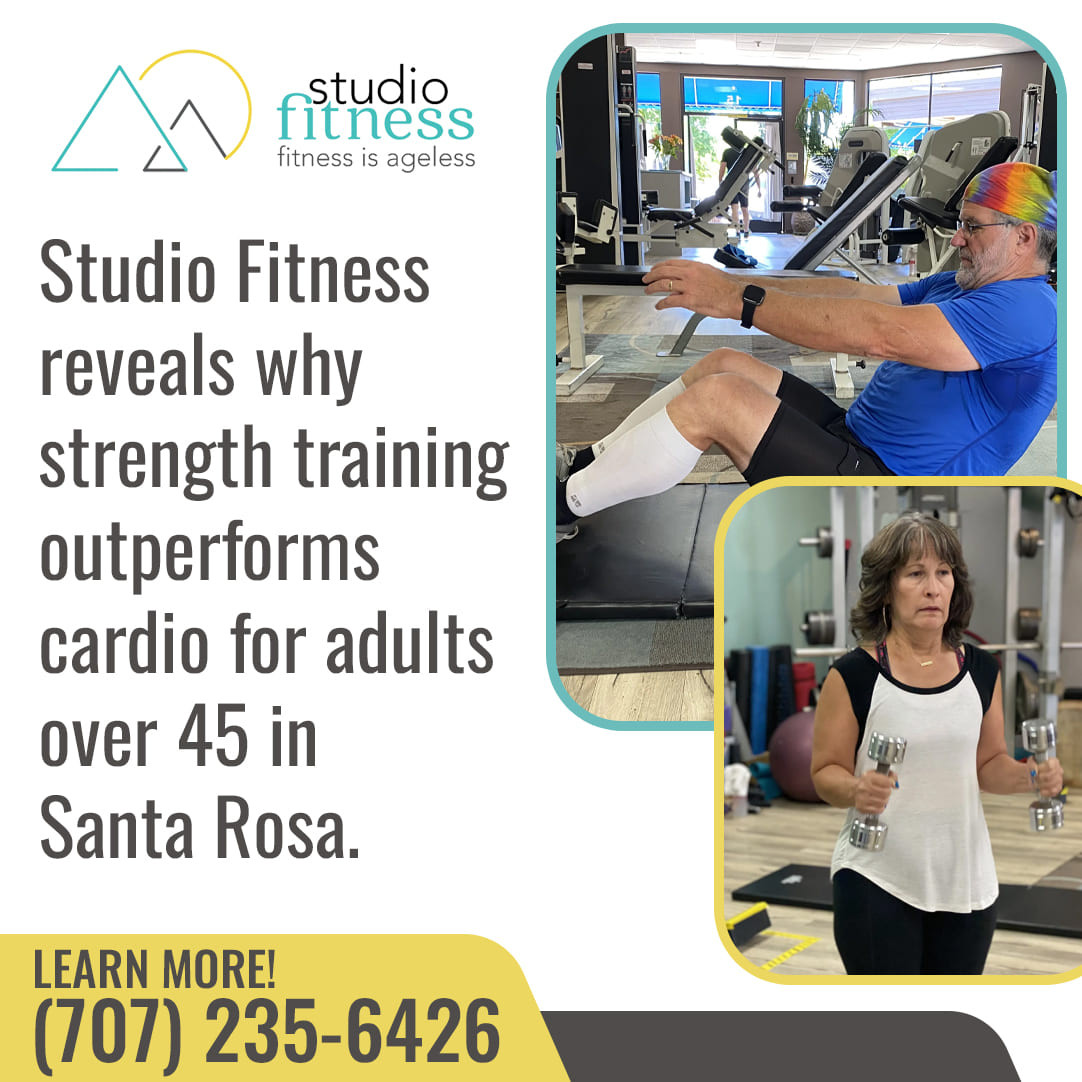
Santa Rosa, CA – Adults over 45 face critical decisions about exercise priorities. While cardiovascular activities receive widespread attention, resistance-based workouts provide superior protection against age-related decline, disease risk, and loss of independence. Being aware of the physiological differences between training approaches helps individuals make informed choices about long-term health strategies. Studio Fitness discusses the physiological variations, decreased risk of illnesses, prevention of falls, and secure strength methods that contribute to healthier aging and sustained mobility in middle-aged adults today.
The Metabolic and Structural Limitations of Cardio-Only Exercise
Cardiovascular exercise strengthens the heart but fails to address muscle preservation. After age 30, adults lose approximately 3-8% of muscle mass per decade, with acceleration after age 60. Cardio-only routines provide no stimulus to slow this decline.
Muscle tissue consumes more calories while at rest compared to fat tissue. When there is a reduction in muscle mass, the resting metabolic rate declines. Research published in Medicine & Science in Sports & Exercise demonstrates that resistance training can increase lean muscle mass by 1.4 kg and raise resting metabolic rate by 7%.
Key Physiological Differences:
-
Cardio improves cardiovascular efficiency but does not build metabolic machinery
-
Resistance work creates mechanical stress that preserves bone density
-
Weight-bearing movements stimulate both cartilage health and skeletal strength
-
Progressive loading signals the body to maintain structural integrity
Cardiovascular, Cognitive, and Skeletal Benefits of Resistance Work
The advantages of a strength training program extend beyond muscular development. A major British Journal of Sports Medicine meta-analysis found that dynamic resistance training considerably reduced systolic and diastolic blood pressure compared with control groups.
Resistance training improves executive function, memory, and processing speed in older adults. Research in the Journal of the American Geriatrics Society demonstrated that strength training exercises performed twice per week for six months improved selective attention and conflict resolution in women aged 65-75.
Mechanical stress from lifting signals the body to maintain or increase bone mineral density. Medical experts recommend resistance training as one of the most effective non-pharmaceutical interventions for preventing and managing osteoporosis.
Essential Components of Safe Strength Programs for Midlife Adults
Appropriate programming requires specific adaptations. Gradual challenge increases can mean improving movement quality, expanding range of motion, adding repetitions, or adjusting tempo. Adults over 50 typically need 48-72 hours for full recovery between sessions. Most individuals see excellent results training 2-3 times per week.
Exercises should translate directly to daily activities. Squatting patterns support chair rising. Hip-hinging movements enable safe lifting. Pushing and pulling exercises maintain shoulder health for reaching and carrying tasks. Studio Fitness designs programs around these functional movement patterns, prioritizing real-world strength over isolated muscle work.
Why Muscle Strength Determines Independence After Age 50
Between the ages of 40 and 50, adults lose approximately 8% of muscle mass per decade. After 50, the rate increases to 10-15% per decade. Research consistently shows that grip strength predicts mortality, disability, and disease risk more accurately than blood pressure or cholesterol levels.
Fall Risk Reduction Through Resistance Training
Falls cause the majority of injury-related deaths in adults over 65. Hip fractures carry devastating consequences, with studies showing 20-30% of hip fracture patients die within one year. Strength training reduces fall risk through stronger legs, improved balance, and denser bones.
Safe Implementation Strategies for Beginning Resistance Work
Proper assessment evaluates movement quality, joint mobility, muscle imbalances, and injury history before starting. Baseline information guides exercise selection and appropriate intensity levels.
Slow, controlled repetitions allow individuals to maintain proper alignment and build strength through a full range of motion without excessive joint stress. This approach maximizes muscle recruitment while minimizing joint wear.
Working with a qualified personal trainer in Santa Rosa provides form corrections, prevents compensation patterns, and ensures appropriate progression. Trainers understand when to increase challenge and when modification serves long-term success.
Finding Quality Strength and Conditioning Support in Santa Rosa
Training environments significantly impact results and adherence. Boutique studios provide supportive spaces where trainers focus on individual needs. Look for nationally recognized certifications (NASM, ACE, NSCA, ACSM) and specific experience with midlife and senior populations.
At Studio Fitness, all trainers hold professional certifications and bring extensive experience in personal training in Santa Rosa for midlife and senior adults.
The facility emphasizes Santa Rosa’s strength and conditioning methods appropriate for long-term health. When clients remain at a facility for 10+ years, programs work, and results matter. High retention in fitness in Santa Rosa facilities reflects quality training and sustainable success.
Begin Your Journey to Stronger, Healthier Aging
The body requires resistance work to maintain strength, mobility, and independence. Cardiovascular exercise cannot replace the comprehensive benefits of properly designed strength training. Studio Fitness offers expertise and supportive environments, making Santa Rosa personal training sustainable for adults focused on longevity.
Certified trainers at Studio Fitness design programs specifically for adults who want to stay strong and capable as they age. Schedule a gym tour and fitness evaluation by calling (707) 235-6426 or emailing shelly@studiofitnesssantarosa.com to learn how personalized strength training can improve movement, reduce injury risk, and support the active lifestyle you want in Santa Rosa and nearby Sonoma County areas. Visit their Contact page to begin building the foundation for healthier aging today.